On-site assessment
We start at your home, calculating the heating load with Manual J methodology. That accounts for insulation, window quality, air sealing, and Timmins design temperatures, not a rule of thumb based on square footage.
Residential Heating + Cooling · Timmins + Northern Ontario
Ironclad Mechanical installs cold-climate heat pumps engineered for Timmins winters, where temperatures regularly drop to -30°C and below. We install LG, Navien, Continental, and Napoleon systems designed to extract heat from outdoor air even in extreme cold, reducing your heating costs while maintaining reliable comfort. With TSSA licensing and 20+ years of trade experience, we handle every aspect of your heat pump installation, from system sizing and equipment selection to ductwork integration and startup testing. We serve Timmins, South Porcupine, Schumacher, and communities across Northern Ontario within a 300 km radius.
The Basics
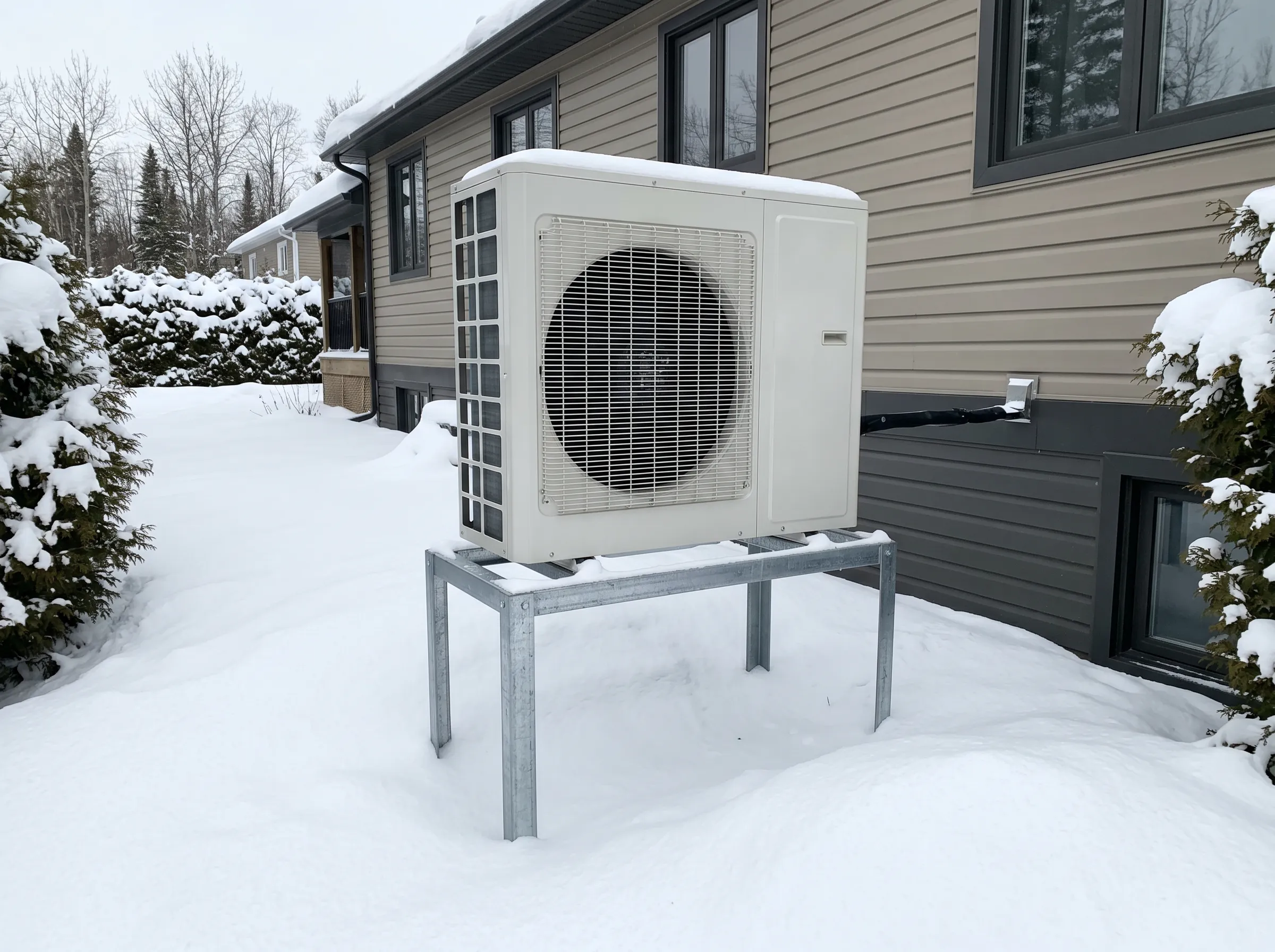
A cold-climate heat pump is an air-source system built to keep heating your home when the temperature outside drops well below freezing. Standard heat pumps lose capacity below -10°C. Cold-climate models are rated to run efficiently down to -25°C or -30°C, which is what Timmins winters actually demand.
They manage it with enhanced vapor injection compressors and variable-speed technology that hold heating output as the cold deepens. A modern cold-climate unit can deliver its full rated heating capacity at -15°C and keep producing usable heat down to -30°C and below.
The principle is the same one your refrigerator uses, run in reverse. The system pulls latent heat out of the outdoor air, even cold air, and moves it indoors through a refrigerant cycle. It does not burn fuel to make heat. It moves heat that is already there, which is why it uses so little energy for the output it delivers.
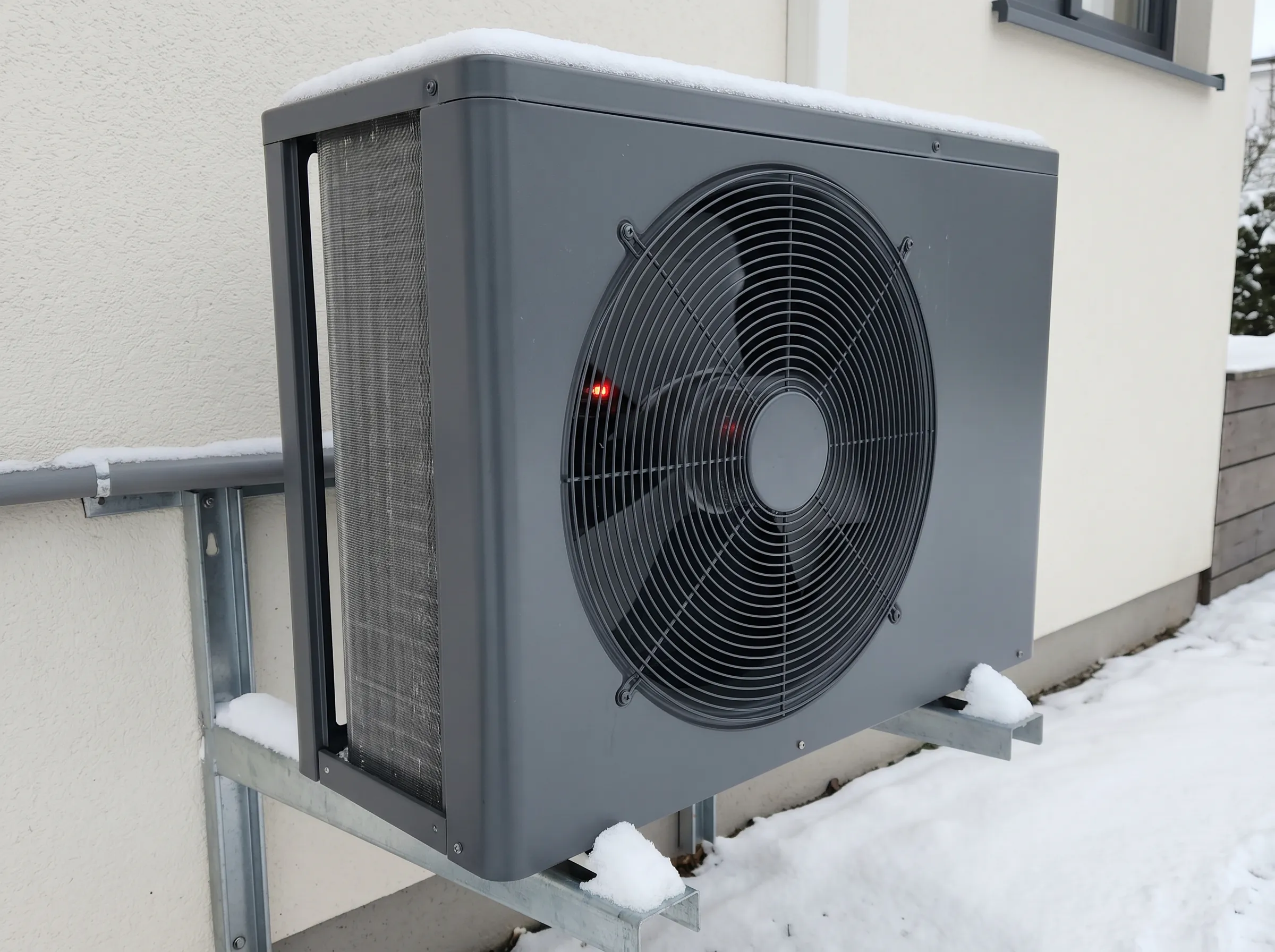
Cold-climate units add features for the conditions up here: pan heaters and crankcase heaters to keep components clear, and advanced defrost cycles that prevent ice from building on the outdoor coil. We install both ducted systems that tie into existing forced-air ductwork and ductless mini-split systems for homes without ducts.
Why Timmins Homes
A heat pump earns its place in Timmins by cutting what you spend to stay warm. Compared with electric baseboard or propane heating, a cold-climate heat pump can lower your heating costs noticeably, even through a Northern Ontario winter.
One system covers both seasons. A heat pump heats in winter and cools in summer, so you are not buying and maintaining a separate furnace and air conditioner. Cold-climate models hold their efficiency across the temperatures Timmins sees from October through April.
Inverter-driven compressors adjust their output to match demand instead of cycling hard on and off the way a single-stage furnace does, which wastes less energy over the season. Heat pumps also cut greenhouse gas emissions compared with fossil fuel heating, and federal and provincial rebate programs may help offset the cost of installation.
Many homeowners here keep their existing furnace and add a heat pump as a hybrid system. The heat pump does the work through most of the winter, and the furnace takes over as backup during the coldest weeks. You get the efficiency without giving up the certainty of gas heat at -35°C.
The Process
A heat pump installation is a sequence of careful steps. Each one protects the efficiency and lifespan of the system you are paying for.
We start at your home, calculating the heating load with Manual J methodology. That accounts for insulation, window quality, air sealing, and Timmins design temperatures, not a rule of thumb based on square footage.
Sizing is where installations succeed or fail. An oversized unit short-cycles and loses efficiency. An undersized one cannot hold comfort during a cold snap. We size to the load the assessment produces.
For ducted systems, we check your existing ductwork for airflow capacity and make the modifications or upgrades needed to handle the air volume a heat pump moves.
We plan placement around snow load, drainage, airflow clearance, and service access, mounting the unit high enough to stay above local snow accumulation.
We install the indoor air handler or coil, integrate it with your duct system, and run the refrigerant line sets through exterior walls with proper sealing.
Heat pumps need dedicated circuits sized for their load, plus disconnect switches and thermostat wiring. We coordinate with licensed electricians when the job calls for it.
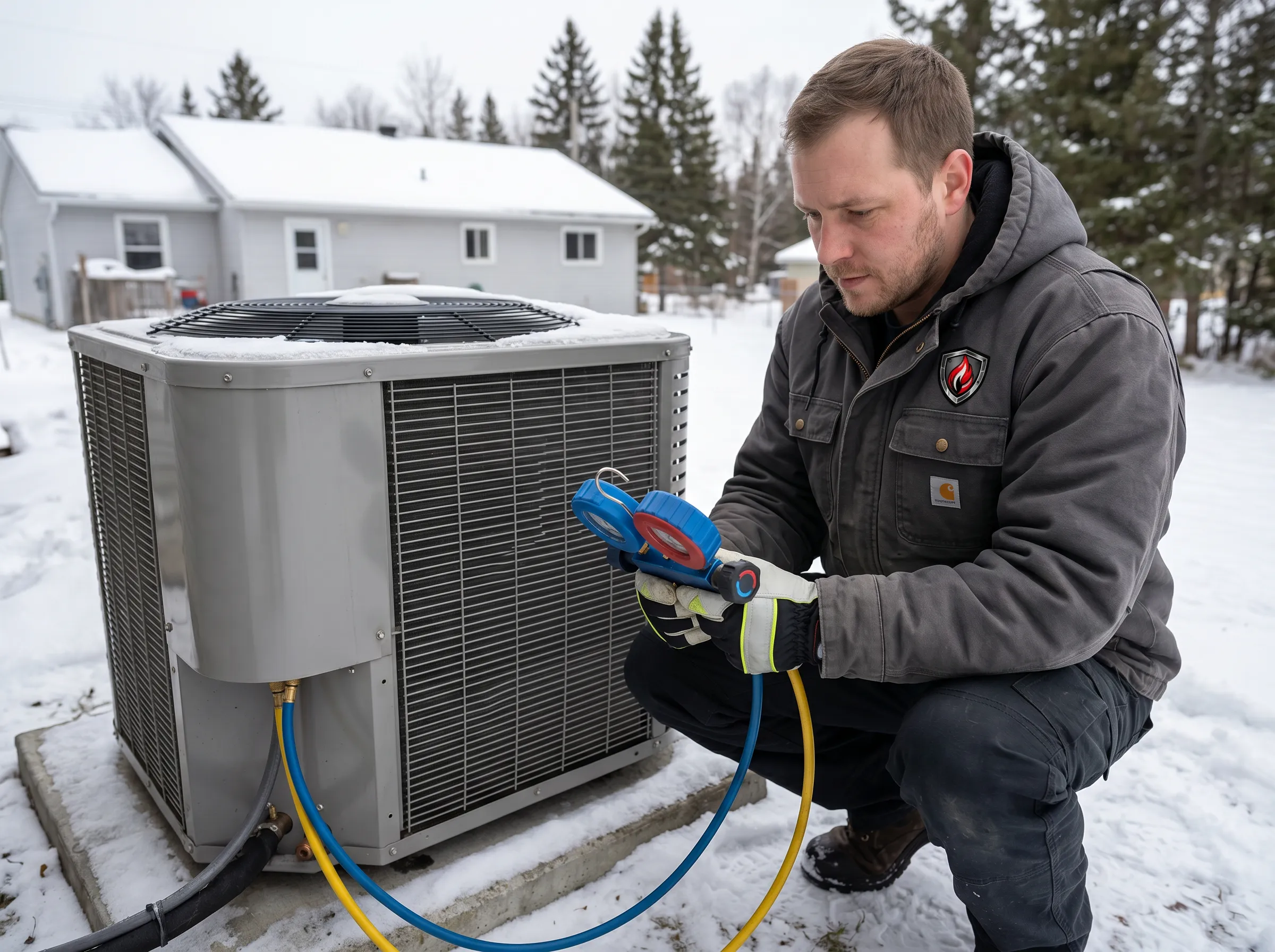
We pressure-test the refrigerant lines, pull a vacuum to remove moisture, charge the system to the manufacturer's specification, and run full heating and cooling cycles.
We verify airflow, check refrigerant pressures across operating temperatures, confirm the defrost cycle works, and calibrate the thermostat settings.
Before we leave, we walk you through operating the system, programming the thermostat, changing filters, and what to expect during a defrost cycle.
Most residential installations take 1 to 2 days. Ductless mini-splits are typically a single day; ducted systems that need ductwork or electrical upgrades may take two. We confirm the timeline during your on-site assessment.
Brands
We install cold-climate systems from four brands we trust in Northern Ontario conditions, and we match the equipment to your home rather than to a sales target.
LG cold-climate heat pumps run inverter-driven compressors and are rated for heating down to -25°C, with both ducted and ductless configurations available.
Navien offers high-efficiency air-to-water heat pumps that integrate with hydronic heating, a strong fit for homes with radiant floor heat or hot-water baseboards.
Continental builds cold-climate mini-split systems with outdoor units rated to -30°C, a popular choice for zone heating in Northern Ontario homes.
Napoleon pairs Canadian engineering with cold-weather performance, available as ducted central systems and ductless wall-mounted units.
We match equipment to your home's heating load, ductwork, and budget, and our recommendations are based on what the system needs to do, not on quotas. All brands we install carry manufacturer warranties covering parts. Labour warranty terms vary with the scope of the installation, and we spell those out in your quote.
System Selection
Both deliver cold-climate heating and cooling. The right one depends on whether your home already has ductwork and how you want to control temperature room to room.
Ducted heat pumps make the most sense when your home already has forced-air ductwork in good shape. The system delivers even heating and cooling everywhere your furnace vents already reach, controlled from one thermostat. If your ducts need work to handle heat pump airflow, our custom ductwork fabrication service handles that in-house, so there is no second contractor to coordinate.
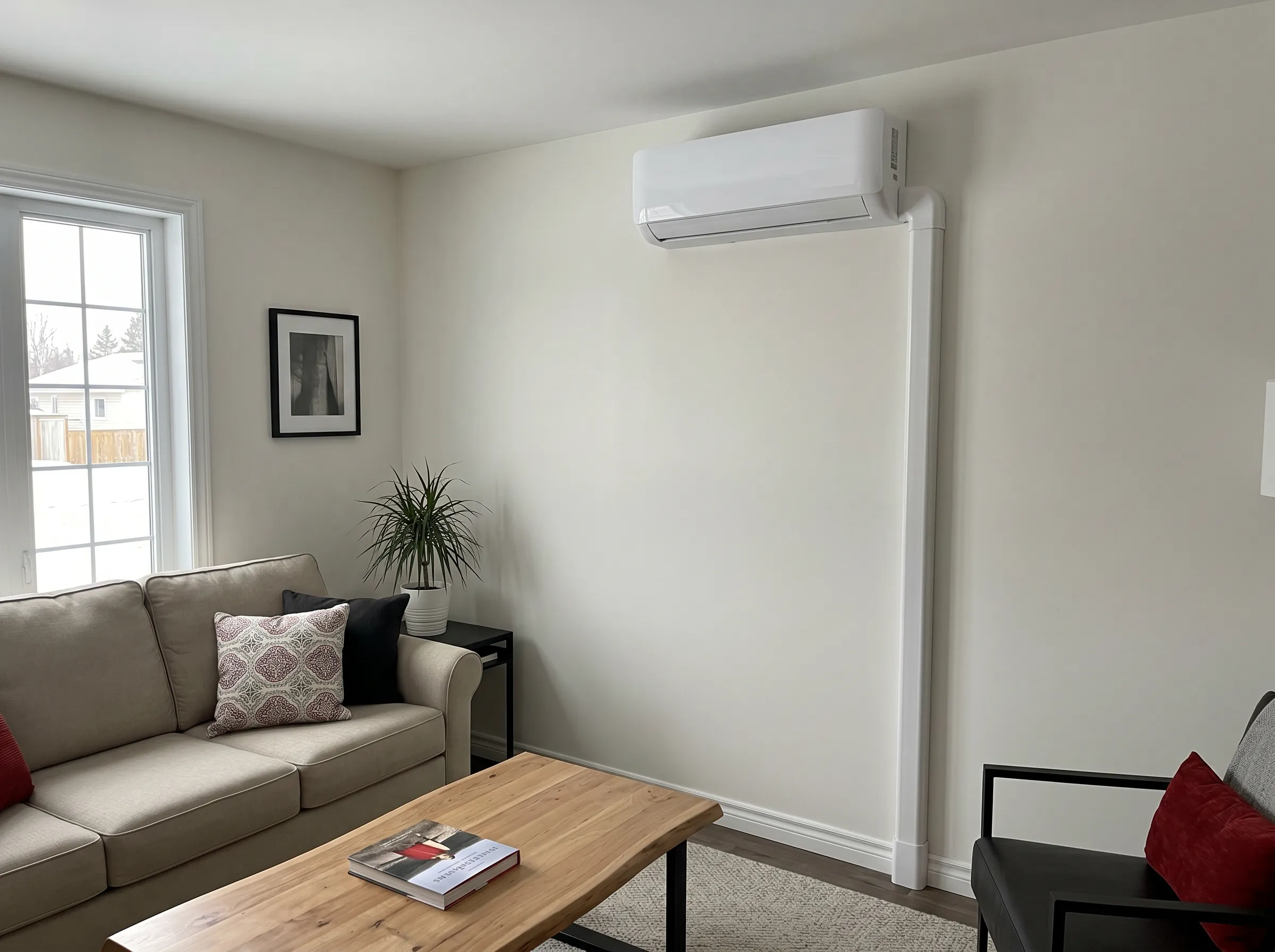
Ductless mini-splits suit homes without ducts, additions, and any space where you want to set its own temperature. A multi-zone setup links up to five indoor heads to a single outdoor unit, and the installation is less invasive, just small refrigerant line penetrations through the exterior wall. We assess your layout, your existing HVAC, and your heating priorities, then recommend the configuration that fits.
Heating Comparison
These two heat your home in fundamentally different ways. Understanding the difference helps you decide whether to replace, add, or combine them.
Heat pumps win on efficiency because moving heat takes far less energy than creating it. A cold-climate heat pump delivers two to three units of heat for every unit of electricity it uses. A furnace produces steady output no matter how cold it gets outside, while a heat pump's capacity eases off as the temperature drops, though cold-climate models keep that loss small.
This is why hybrid systems are common in Timmins. The heat pump runs as primary heating through most of the season, and the system switches automatically to the furnace when the outdoor temperature falls below a set threshold, usually -15°C to -20°C. You get heat pump efficiency on milder days and reliable furnace heat during extreme cold. If you are weighing a new furnace as part of that pairing, see our furnace installation page for how the two systems work together.
Rebates + Incentives
Several programs can offset the cost of a cold-climate heat pump. Amounts and eligibility change often, so treat the figures here as a starting point and confirm current details before you budget.
The Canada Greener Homes Grant has offered up to $5,000 for qualifying heat pump installations that meet efficiency criteria. That figure is illustrative, not a promise. Verify the current amount and whether the program is open with Natural Resources Canada.
The Enbridge Home Efficiency Rebate provides incentives for natural gas customers in eligible service areas who install high-efficiency equipment. Check current eligibility and amounts directly with Enbridge.
Some municipal utilities and Northern Ontario co-ops offer their own rebates for cold-climate heat pump installations. Contact your local utility for current programs.
Rebate eligibility usually requires pre-approval, an energy audit, and installation by a licensed contractor. We can guide you through the requirements and provide the documentation your application needs. Programs and amounts change, so confirm current offerings with the administrators before you make equipment decisions based on a rebate.
What to Expect
Here is what a cold-climate heat pump actually does through a Timmins winter. It holds its heating capacity down to -25°C to -30°C, which covers the vast majority of the conditions you will see. During a deeper cold snap below -30°C, output drops off, and that is when a hybrid system switches to furnace backup or supplemental electric heat stages kick in.
Defrost cycles are normal. When the outdoor temperature sits between -5°C and +5°C with high humidity, frost forms on the outdoor coil, and the system briefly reverses to melt it. You may see steam rising from the unit. A defrost cycle lasts 5 to 10 minutes and happens every 30 to 90 minutes depending on conditions. Indoor temperature may dip slightly, then recovers quickly.
A heat pump runs longer, gentler cycles than a furnace because it delivers air at a lower temperature, around 30 to 40°C versus 50 to 60°C from a gas furnace. That is normal and efficient, not a sign of a problem. The longer run times are part of how the system stays comfortable while using less energy.
The outdoor unit is built to handle snow and ice, and we install it on an elevated pad or a wall bracket to keep it above the snow line. Regular filter changes and an annual professional service keep it running efficiently right through the heating season, and we handle that maintenance too.
-30°C
Cold-climate operating floor for the systems we install
5-10 min
Typical defrost cycle, every 30 to 90 minutes
30-40°C
Heat pump supply air, versus 50 to 60°C from a furnace
Service Area
Our primary service area covers Timmins, South Porcupine, and Schumacher. We also serve Cochrane, Kapuskasing, Kirkland Lake, Hearst, and Smooth Rock Falls, and we cover communities within a 300 km radius of our shop in Porcupine, traveling farther for the right project. Every installation includes startup testing, a full system walkthrough, and ongoing service support, and our two-truck operation lets us schedule installations and respond to service calls efficiently across Northern Ontario. Heat pump installation is part of the full range of HVAC services in Timmins we provide. Call (705) 221-0677 to confirm availability in your area.
Why Ironclad
Ironclad Mechanical is an independent HVAC contractor serving Timmins and Northern Ontario, built on word of mouth and referrals. The 20+ years of trade experience in ownership shows in the parts of an installation you do not see: the load calculation, the vacuum on the lines, the startup numbers checked across operating temperatures.
We are TSSA licensed and fully insured with General Liability and WSIB coverage, and certified in Working at Heights, WHMIS, and MOL Workers Safety. We install LG, Navien, Continental, and Napoleon cold-climate systems, matched to your home's heating load and budget, and we handle every part of the job: sizing, ductwork modifications, refrigerant line work, electrical coordination, and startup testing.
Our pricing is straightforward and the recommendation you get is based on your needs, not a sales target. Once your system is running, our heat pump repair and maintenance services keep it efficient, and if you are planning ahead for summer, we also handle air conditioning installation . For all your heating and cooling needs, call (705) 221-0677.
Credentials
FAQ
Call dispatch at (705) 221-0677 or request service. We'll get back to you fast.